
How to Answer U.S. Visa Interview Questions to Increase Approval Chances – First Consulting Group
minhle
FAQ (Frequently Asked Questions)
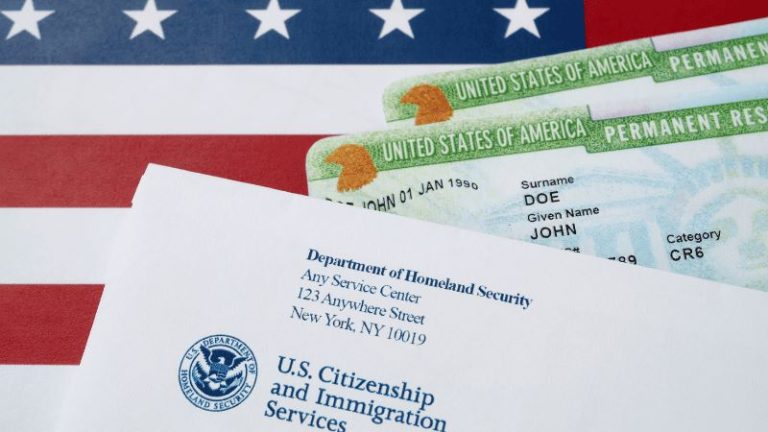
If you are waiting for a spousal sponsorship under the F2A category, the biggest question is usually: “How long will it take until my case becomes current?” or “Is there any way to shorten the processing time?” Many people do not realize that once the petitioner becomes a U.S. citizen, the case can be upgraded to the IR1 or CR1 category, which is not subject to annual visa limits and is therefore processed faster.
First Consulting Group (FCG) – Immigration Attorneys can help you clearly understand this issue, from the definition and processing steps to the moment your case is upgraded to the immediate relative category, along with the specific benefits that the upgrade brings.
The F2A category is a U.S. immigrant visa classification for the spouse or unmarried children under 21 years old of a lawful permanent resident (green card holder). This visa allows permanent residents to file petitions for their spouse and unmarried children under 21 to immigrate to the United States. Because this category is not considered an immediate relative category, visa issuance depends on annual quotas and the progress announced in the monthly Visa Bulletin.
Our office can assist you with preparing a single status affidavit and marriage registration procedures in Vietnam. After the marriage certificate is issued, we will continue preparing the complete documentation required by U.S. immigration authorities.
Currently, the processing time for a green card holder sponsoring a spouse is approximately 3.5 – 4 years. Applicants should regularly follow the Visa Bulletin to know the exact progress. Note that even after USCIS approves the petition, the waiting time still depends on the F2A priority date.
Important Note: Your case is processed based on the priority date and the Visa Bulletin schedule. You should monitor Chart B (Dates for Filing) to know when your case can be transferred to the National Visa Center (NVC) for processing. After completing the required documents, continue monitoring Chart A (Final Action Dates) to wait for the interview appointment. The Visa Bulletin is an important tool to track visa processing progress, and checking it regularly helps avoid missing important stages or unnecessary delays.
For the Petitioner
For the Beneficiary

You should regularly check the status of your green card spouse sponsorship case on the USCIS or NVC systems to stay updated on any requests for additional documents and to avoid delays.
The application package for the F2A category and unmarried children under 21 generally includes the following:
For the Petitioner
For the Beneficiary
In addition to civil documents, the relationship should be supported with evidence of a genuine marriage, such as proof of shared life, communication history, and photos taken at different times.
If the evidence is weak or insufficient, you may receive a Request for Evidence (RFE) from USCIS, which can significantly delay the processing time or even lead to a visa denial. Examples of supporting evidence include:
The ideal time for an upgrade occurs when the permanent resident petitioner completes the naturalization process and becomes a U.S. citizen. Under U.S. immigration law, U.S. citizens are allowed to sponsor their spouse and unmarried children under 21 as immediate relatives. This category includes IR1 (spouses married for more than 2 years) and CR1 (spouses married for less than 2 years). Unlike the F2A category, which is subject to annual visa limits, IR1/CR1 visas are not restricted by quotas, allowing for significantly faster processing.
Once the petitioner receives a Certificate of Naturalization, they should submit a request to USCIS or the National Visa Center (NVC) to upgrade the case to the new category. After the request is processed, the case will be converted to IR1 or CR1 without the need to file a new Form I-130. The petitioner only needs to provide proof of U.S. citizenship. This upgrade removes the case from the visa quota waiting list and can shorten the remaining processing time from several years to just a few months.
Legally, the case becomes eligible for conversion as soon as the petitioner becomes a U.S. citizen. However, in practice, USCIS or NVC systems may not always update the case status automatically or immediately, especially for cases that have been pending for a long time or have already moved to the NVC stage.
You should proactively notify the appropriate agency and submit the required documents, especially when the priority date is approaching or when the visa bulletin shows signs of backlog. If the case is already at the NVC stage, you can send an email or update the case online to request faster processing. If the case is still with USCIS, you should submit a written request along with a copy of the naturalization certificate.
4 Important Steps to Take Immediately After the Case Is Upgraded

The first and biggest benefit is completely bypassing the visa quota waiting line. After the upgrade, the waiting time can drop from several years to just a few months. Typically, IR1/CR1 cases take about 17 to 24 months to complete, depending on the processing center.
The second benefit is faster adjudication. Immediate relative cases are usually given priority in processing. From the time additional documents are submitted to the National Visa Center (NVC) until the interview appointment is scheduled, the process may take only 3 to 6 months instead of several years as before. This is especially important for families that need to reunite quickly due to health or work reasons.
The third benefit is a higher likelihood of approval from a procedural standpoint. Currently, U.S. immigration authorities do not publish official approval rates by specific visa categories. However, in practice, immediate relative categories such as IR1/CR1 generally have a simpler review process than F2A, since they are not subject to visa quotas and do not depend on visa bulletin availability. This significantly reduces the risk of long delays or complications caused by extended waiting periods.
Guidance from immigration attorneys at First Consulting Group on handling special situations:
Important CSPA note when upgrading a case: Not every case with a child derivative should be upgraded immediately after the petitioner naturalizes. If at the time of naturalization the child’s CSPA age is already over 21, the case will automatically convert from F2A to F1 (unmarried adult children of U.S. citizens). In reality, the F1 category often has a longer waiting time, which may extend the case for several more years. U.S. immigration law allows the beneficiary to request to remain in the F2A category (opt-out). However, this option is not automatic and must be requested proactively at the correct time.
Understanding the upgrade mechanism can help shorten waiting time and allow families to reunite sooner. However, each case has its own circumstances. If you need more information about the F2A category, you may contact First Consulting Group for professional guidance and assistance with the immigration process.
HOTLINE
Top Articles

The U.S. immigration process can be intricate, involving detailed legal requirements and procedures. To better address your unique situation, please provide your contact details to arrange a personalized consultation. A member of First Consulting Group’s dedicated team will contact you during business hours to offer expert guidance.

USA
12966 Euclid St., Suite 520, Garden Grove, CA 92840
(714) 638-3111
USA
989 Story Rd., Suite 8075, San Jose, CA 95122
(408) 998-5555
USA
1880 S Dairy Ashford Rd Ste 539, Houston, TX 77077
(832) 353-3535
VIETNAM
8th Floor, Tuoi Tre Tower, 60A Hoang Van Thu St., Duc Nhuan Ward, Sai Gon
(028) 3516-2118
VIETNAM
5th Floor, Bao Minh Building, 08 Phan Van Tri St., Ninh Kieu Ward, Can Tho City
(0292) 383-0001
VIETNAM
5th Floor, Viettel Building, 11 Ly Thuong Kiet St., Thuan Hoa Ward, Hue City
(0234) 381-0016
VIETNAM
6th Floor, ACB Building, 218 Bach Dang St., Hai Chau Ward, Da Nang City
0886 00 34 00