
How to Answer U.S. Visa Interview Questions to Increase Approval Chances – First Consulting Group
minhle
FAQ (Frequently Asked Questions)
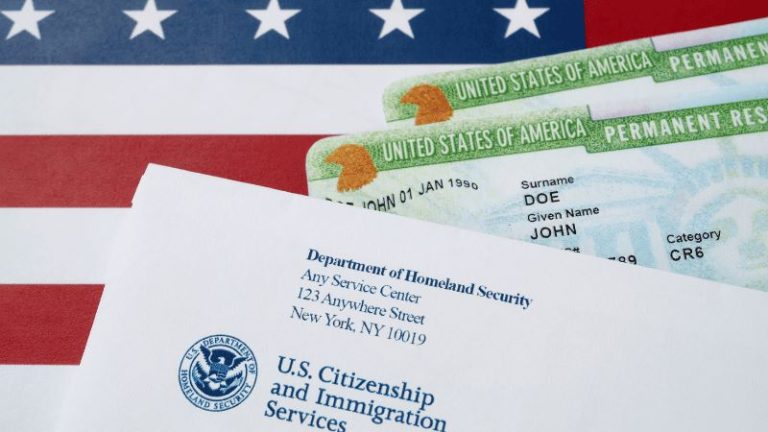
With outstanding advantages in economy, healthcare, education, career opportunities, and quality of life, the demand to live and work in the United States continues to rise. However, each case has different requirements, processing times, and legal conditions, leaving many individuals uncertain when making a decision. In this article, First Consulting Group provides an overview of U.S. immigrant visa categories to help you proactively prepare your application, minimize errors, and avoid unrealistic expectations.
A U.S. Immigrant Visa allows foreign nationals to move to the United States for permanent residence. After lawful entry, the applicant is granted lawful permanent resident status.

Many applicants confuse immigrant and nonimmigrant visas when exploring U.S. pathways.
| Criteria | Immigrant | Nonimmigrant |
| Purpose | Live and work permanently in the U.S. | Temporary stay for tourism, study, or business |
| Intent | Intent to reside permanently | Must prove intent to return home |
| Work Authorization | Unlimited work authorization | Limited or restricted depending on visa type |
| Validity | Permanent resident status (2-year conditional or 10-year green card) | Fixed validity period (months to years) |
| Extension | Green card renewal periodically | Limited extensions depending on category |
| Benefits | Nearly full rights (except voting) | Limited social and public benefits |
| Change of Status | Must remove conditions if holding a 2-year green card | No automatic conversion; requires a separate legal process |
A nonimmigrant visa does not automatically convert into an immigrant visa. If you meet the eligibility requirements under immigration law, you may complete a separate process to change status:
Changing visa categories after entry only applies in certain cases. Not every visa type is eligible, and the process is always subject to strict review by immigration authorities.
U.S. immigrant visa categories are currently divided into four main groups:
Each group has different criteria and requirements.
Family-based immigration is divided into two main groups, with clearly different approval mechanisms and processing times.
The IR (Immediate Relatives) group includes spouses, unmarried children under 21, and parents of U.S. citizens. These categories are not subject to annual visa caps, so cases are typically processed relatively quickly if no additional evidence is required.
In contrast, the F (Family Preference) group is subject to annual visa quotas by category and country, resulting in significantly longer wait times (depending on the monthly Visa Bulletin).
For the Vietnamese community, family sponsorship remains the most common pathway to U.S. immigration, especially for spousal, children, and parent petitions.

The Employment-Based (EB) category is suitable for individuals with professional expertise and work skills.
EB-1: For individuals with extraordinary ability, outstanding professors/researchers, or multinational managers/executives.
EB-2: For individuals with advanced degrees or exceptional ability.
EB-3: For professionals with bachelor’s degrees, skilled workers, or unskilled workers.
The Employment-Based program is becoming more feasible for some Vietnamese professionals in high-skilled fields such as technology and healthcare under EB-1 and EB-2 NIW. Because the eligibility standards are lower than EB-1 and EB-2 NIW, EB-3 attracts a large number of applications, which leads to longer waiting times.

The EB-5 Green Card is designed for foreign investors who wish to live and work permanently in the United States through investments that create jobs for U.S. workers. Currently, the EB-5 program is implemented in two main forms:
1. Direct Investment (Direct EB-5)
The investor establishes a new business or purchases an existing enterprise in the United States, directly participates in management, and is responsible for proving job creation as required by the program.
2. Investment Through a Regional Center
This is a more passive investment model in which the investor does not need to directly manage the business. Funds are invested in projects approved by U.S. immigration authorities. Currently, more than 90% of EB-5 applications are filed under this model due to its flexibility and lower management risk.
For an EB-5 petition to be reviewed and approved, investors must meet the following core requirements:
Investment Amount
Job Creation Requirement: The investment project must prove the creation of at least 10 full-time jobs for U.S. citizens or lawful permanent residents, in compliance with EB-5 program regulations.
U.S. Citizenship and Immigration Services (USCIS) considers the lawful source of funds a critical factor in EB-5 petitions. The capital must be legal, transparent, and fully traceable, including sources such as business income, personal savings, asset transfers, or inheritance. During 2024–2025, USCIS has intensified scrutiny of this requirement, particularly for applications from emerging markets, making thorough and consistent financial documentation especially important.

In addition to common immigrant categories, U.S. immigration law also provides certain special categories for individuals with unique circumstances or legal status, including:
Special Immigrant Category (EB-4)
This category is designated for groups given priority under U.S. law. It includes religious workers such as ministers, priests, and nuns working for qualifying religious organizations.
It also includes Special Immigrant Juveniles (SIJ), who are minors in the United States determined by a state court to have been abandoned, abused, neglected, or without lawful guardians.
Certain individuals who have served international organizations or the U.S. government abroad may also qualify under this category.
Note: The R-1 religious visa is a temporary visa that allows religious workers to come to the United States for a specific period. If permanent residence is desired, the applicant must transition to the EB-4 category and meet all immigration requirements.
Refugee and Asylum (Refugee / Asylum)
This is a humanitarian protection category for individuals who cannot or do not wish to return to their home country due to fear of persecution based on race, religion, nationality, political opinion, or membership in a particular social group.
Applicants are first granted protected legal status and may later apply for a Green Card after meeting the required time and eligibility criteria. This is not a standard immigrant visa category applied for from outside the United States.
These special categories have distinct eligibility standards and procedures, typically requiring strong evidence of specific circumstances and strict compliance with legal regulations.
Applicants for U.S. immigration must meet the following fundamental requirements:
1. Have a Lawful Petitioner or Sponsor
Depending on the immigrant category, sponsorship requirements vary:
2. Appropriate Criminal Record
The applicant must not have committed serious security-related offenses, must not have a significant criminal record, and must not have engaged in fraud or violated U.S. immigration laws.
3. Financial Capability
Immigration applicants must demonstrate the ability to financially support themselves in the United States and not become a burden on the public welfare system.
4. Full Compliance with U.S. Immigration Law
The application and residency process must comply with current legal regulations, without violating visa conditions or immigration status.
5. Meeting the Specific Requirements of Each Immigrant Category
Each immigrant visa category has specific criteria regarding education level, work experience, or family relationship, and will be reviewed independently under U.S. immigration law.
An immigrant visa issued for entry into the United States is typically valid for about 6 months (depending on the case). During this period, the visa holder must enter the United States.
Upon entry, the immigrant visa stamp in the passport serves as temporary proof of permanent residence. The physical Permanent Resident Card (Green Card) is usually mailed to the registered address within 30–90 days.
Processing times do not have a fixed timeline and largely depend on the visa category, annual visa quotas, Priority Date, and the applicant’s country of chargeability. Categories not subject to annual caps, such as IR, are generally processed faster, while capped categories may require waiting for many years.
Additionally, the beneficiary’s nationality, visa quota limits, Priority Date, and case status directly affect processing progress. Countries with high filing volumes often experience longer waits due to per-country visa limits. Incomplete documentation or inconsistent information may result in requests for evidence (RFE), extending the adjudication time.
With over 23 years of supporting the Vietnamese community in U.S. immigration matters, FCG’s team believes that immigrating to the United States should be viewed as a long-term journey rather than a one-time decision. Applicants should be prepared for potentially extended waiting periods, understand the specific nature of their case type, and build a suitable plan to adapt to life in the United States while avoiding unrealistic expectations from the beginning.
Important principles to remember:
First Consulting Group – A U.S. Immigration Law Firm provides comprehensive case evaluations to determine suitable immigration categories and build a lawful, safe immigration pathway. You may contact us for a free initial consultation before developing a specific plan.
FOR A FREE CONSULTATION, PLEASE CALL:
Garden Grove Office: (877) 348-7869
San Jose Office: (408) 998-5555
Houston Office: (832) 353-3535
Vietnam Office: (028) 3516-2118
All information provided is for reference only and does not constitute legal advice. Policies and figures are current at the time of writing. For personalized guidance, please contact First Consulting Group.
Top Articles
The U.S. immigration process can be intricate, involving detailed legal requirements and procedures. To better address your unique situation, please provide your contact details to arrange a personalized consultation. A member of First Consulting Group’s dedicated team will contact you during business hours to offer expert guidance.

USA
12966 Euclid St., Suite 520, Garden Grove, CA 92840
(714) 638-3111
USA
989 Story Rd., Suite 8075, San Jose, CA 95122
(408) 998-5555
USA
1880 S Dairy Ashford Rd Ste 539, Houston, TX 77077
(832) 353-3535
VIETNAM
8th Floor, Tuoi Tre Tower, 60A Hoang Van Thu St., Duc Nhuan Ward, Sai Gon
(028) 3516-2118
VIETNAM
5th Floor, Bao Minh Building, 08 Phan Van Tri St., Ninh Kieu Ward, Can Tho City
(0292) 383-0001
VIETNAM
5th Floor, Viettel Building, 11 Ly Thuong Kiet St., Thuan Hoa Ward, Hue City
(0234) 381-0016
VIETNAM
6th Floor, ACB Building, 218 Bach Dang St., Hai Chau Ward, Da Nang City
0886 00 34 00