As long as one parent meets the eligibility requirements to sponsor, the petition can be filed. USCIS does not require both parents to participate. Only one qualified legal sponsor is needed to submit the petition.
The process of sponsoring a child to immigrate to the United States can be complex, particularly in determining the correct preference category, with waiting times that may be lengthy depending on the case and strict documentation requirements; First Consulting Group FCG, a U.S. Immigration Law Firm, provides a detailed explanation of the family reunification process and supports families from the initial decision through final reunion in the United States, helping reduce delays and avoid common mistakes.
When parents become U.S. citizens, sponsoring their children for immigration is generally more favorable than for green card holders. U.S. immigration law, through USCIS, classifies petitions based on the child’s age and marital status, placing them into the appropriate category. Each category has its own priority level and annual visa quota, so processing times vary and may change by stage.
IR-2 (Immediate Relative)
This category is processed the fastest and applies to unmarried children under 21 of U.S. citizens. Because it falls under the Immediate Relative group and is not subject to annual visa caps, cases are usually resolved within approximately 14 to 18 months. Children approaching age 21 may be protected under the Child Status Protection Act CSPA to retain eligibility without moving to a longer-wait category.
U.S. citizens may sponsor unmarried children age 21 or older under F1. This category is subject to annual visa limits, and wait times depend on visa availability published monthly in the Visa Bulletin. Some cases may qualify for CSPA consideration, although the scope is narrower than for children under 21. Currently, the total waiting time for F1 is about 8 to 9 years, though this may fluctuate depending on backlog levels and immigration policies.
U.S. citizens may sponsor married children of any age under F3. Because this category has lower priority and annual visa limits, cases are often affected by backlogs, resulting in long and fluctuating wait times. On average, F3 processing takes about 14 to 15 years.
Lawful permanent residents may also sponsor their children, but with more limitations compared to U.S. citizens.
F2A applies to spouses and unmarried children under 21 of permanent residents, with average processing times of approximately 2 to 3 years.
Permanent residents may sponsor unmarried children over 21 under F2B. Because this category is subject to annual visa caps, processing times are typically longer, often around 8 to 9 years or more depending on visa backlog.
For more information: Spousal Sponsorship to the United States – Detailed Guide with First Consulting Group.
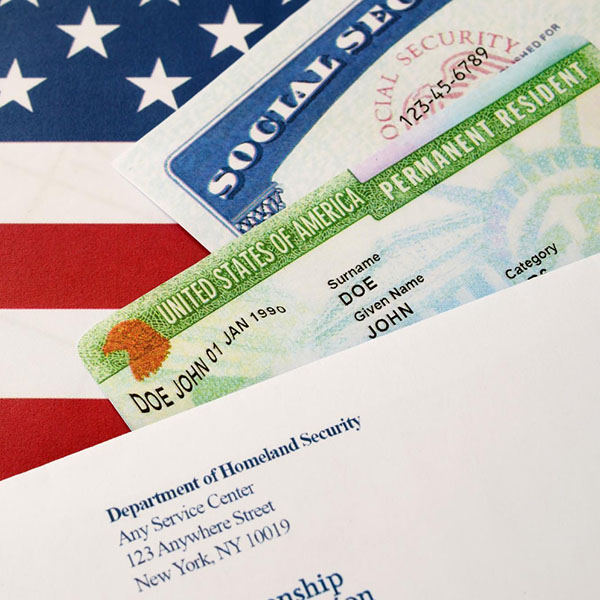
To have a child sponsorship petition approved by USCIS, parents must meet three main requirements:
To prove the parent-child relationship, the sponsor must prepare documents showing family ties over time, such as a birth certificate listing the parents’ names, family photos, proof of regular communication, or evidence of financial support.
After preparing sufficient documentation, the sponsor files Form I-130 (Petition for Alien Relative), including:
These documents allow USCIS to verify the relationship and legal basis of the petition, and determine whether to approve the case or request additional evidence.
Step 1: File Petition with USCIS
The family submits Form I-130 for USCIS to confirm the parent-child relationship and approve the sponsorship petition.
Step 2: Processing at the National Visa Center (NVC)
After USCIS approval, the case is transferred to the National Visa Center to complete required steps such as paying fees, submitting Form I-864 (Affidavit of Support), completing Form DS-260, and providing civil documents. Once all documents are accepted, the applicant will be scheduled for an interview.
Step 3: Vaccinations, Medical Examination, and Consular Interview
The applicant must complete a medical examination and required vaccinations before attending the immigrant visa interview at the U.S. Consulate.
Step 4: Receive Immigrant Visa and Pay Green Card Fee
If the interview is successful, the applicant is issued an immigrant visa and must pay the USCIS Immigrant Fee before or shortly after entering the United States.
Step 5: Enter the U.S. and Receive Green Card
Upon entry, the applicant becomes a lawful permanent resident. The green card will be mailed to the U.S. address provided.

| Sponsorship Category | Applicable Beneficiary | Estimated Waiting Time |
| IR2 | Unmarried child under 21 of a U.S. citizen | Approximately 14–18 months |
| F1 | Unmarried child over 21 of a U.S. citizen | Approximately 8–9 years |
| F2A | Spouse and unmarried child under 21 of a lawful permanent resident | Approximately 3–4 years |
| F2B | Unmarried child over 21 of a lawful permanent resident | Approximately 8–9 years |
The Visa Bulletin is the schedule announcing when cases become current for processing. These dates are for reference only because the bulletin is updated monthly and reflects the number of immigrant visas available in each period.
Each month, the U.S. Department of State publishes a Visa Bulletin for immigrant categories, including two corresponding charts for different stages of the case:
Chart A – Final Action Dates:
This chart shows when a case is eligible for interview scheduling and visa issuance. If the priority date is earlier than or equal to the date listed in this chart, the case has reached the final stage. The NVC will schedule an interview at the U.S. Consulate for overseas cases, or USCIS will issue a green card if the applicant files within the United States.
Chart B – Dates for Filing:
This chart indicates when a case may be submitted to the NVC to begin processing, pay fees, and submit documents. It does not mean the case is ready for an interview yet.
How to Read Dates and Symbols
Quick Summary
Many applicants make mistakes because they do not clearly understand the differences between visa categories:
If a green card holder becomes a U.S. citizen while sponsoring a child, the petition may be upgraded to a faster category. However, this upgrade does not happen automatically. Families should proactively submit proof of naturalization to USCIS or the NVC to avoid delays.
After updating, the case may change as follows:
However, in some periods, F2B may actually move faster than F1 due to heavy backlog in F1. In that situation, the beneficiary may request to opt out and remain in F2B to shorten waiting time.
Summary:
The CSPA (Child Status Protection Act) is a U.S. immigration law that allows certain children (usually under 21) to retain their classification even if they turn 21 during long processing times. This rule is especially important because without timely CSPA protection, an IR2 case may convert to F1, significantly increasing waiting time.
When a child is nearing 21, parents should closely monitor USCIS processing times and the Visa Bulletin, and prepare necessary documentation to request CSPA protection at the appropriate time. Proactive action helps preserve the faster category and avoid unnecessary delays.
Sponsoring a child for U.S. immigration can be complex and requires a clear understanding of immigration laws and careful preparation. Processing time depends on the visa category, the child’s age, and marital status.
For personalized guidance, contact First Consulting Group. Their U.S. immigration attorneys assist families from the beginning, provide accurate case evaluations, and help shorten the path to family reunification.
For a free consultation, please call:
The U.S. immigration process can be intricate, involving detailed legal requirements and procedures. To better address your unique situation, please provide your contact details to arrange a personalized consultation. A member of First Consulting Group’s dedicated team will contact you during business hours to offer expert guidance.

USA
12966 Euclid St., Suite 520, Garden Grove, CA 92840
(714) 638-3111
USA
989 Story Rd., Suite 8075, San Jose, CA 95122
(408) 998-5555
USA
1880 S Dairy Ashford Rd Ste 539, Houston, TX 77077
(832) 353-3535
VIETNAM
8th Floor, Tuoi Tre Tower, 60A Hoang Van Thu St., Duc Nhuan Ward, Sai Gon
(028) 3516-2118
VIETNAM
5th Floor, Bao Minh Building, 08 Phan Van Tri St., Ninh Kieu Ward, Can Tho City
(0292) 383-0001
VIETNAM
5th Floor, Viettel Building, 11 Ly Thuong Kiet St., Thuan Hoa Ward, Hue City
(0234) 381-0016
VIETNAM
6th Floor, ACB Building, 218 Bach Dang St., Hai Chau Ward, Da Nang City
0886 00 34 00