
A U.S. Green Card not only opens the door to living and working in the United States and sponsoring certain family members, but it also represents the beginning of a stable, long-term life in the country. To ensure a smooth immigration journey, individuals who plan to immigrate or have recently arrived in the U.S. should clearly understand the rights and responsibilities associated with permanent residency. In this article, First Consulting Group provides an overview of the key benefits and obligations of lawful permanent residents, helping readers feel more confident as they integrate and build a new life in the United States.
A U.S. Permanent Resident Card (Green Card) is a document that confirms lawful permanent resident status, allowing foreign nationals to live, work, and reside long-term in the United States.
A 2-year conditional Green Card is issued to immigrants through marriage or the EB-5 investment program. This type of card requires the holder to remove the conditions before it expires in order to maintain permanent resident status. The removal of conditions helps verify the legitimacy of the marriage or ensure that the investment meets immigration requirements.
A 10-year Green Card is issued to permanent residents who are no longer subject to conditions, meaning the U.S. Citizenship and Immigration Services (USCIS) has completed its review and approved the legitimacy of the marriage or the investment previously made. Permanent residents with this card do not need to file a petition to remove conditions; they only need to renew the card when it is close to expiration, while their permanent resident status remains valid as long as they comply with immigration regulations.
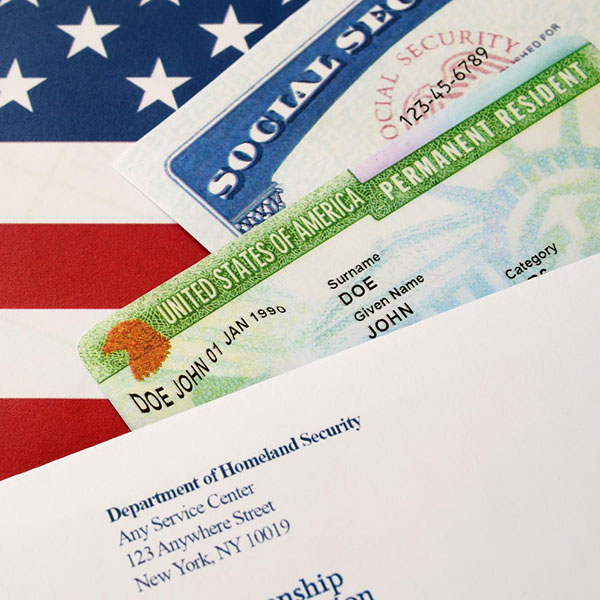
Whether it is a 2-year or 10-year Green Card, the holder is still considered a lawful permanent resident of the United States. The difference lies in the validity period and the requirements to maintain permanent resident status. Holders of a 2-year conditional Green Card are often reviewed more carefully because of the attached conditions. Staying outside the United States for too long or failing to demonstrate the intent to maintain residency may affect permanent resident status, regardless of the type of card held.
The United States offers several immigration pathways, including family-based, employment-based, investment-based, and special immigrant categories.
Immediate relatives of U.S. citizens (Immediate Relatives – IR) are not subject to annual visa limits, and processing times are typically faster.
Family Preference categories:
All applicants for permanent residence must not fall under the inadmissibility grounds outlined in U.S. immigration law (INA §212), including immigration fraud, serious immigration violations, criminal records, security risks, health-related concerns, or the likelihood of becoming a public charge.

A Green Card may be revoked, or the holder may be placed in removal proceedings, in the following situations:
The team at First Consulting Group also notes that maintaining continuous residence is a key factor when USCIS determines whether someone has abandoned their Green Card. Many people believe that returning to the U.S. once a year is sufficient. In reality, USCIS evaluates the total length of absence, the purpose of travel abroad, as well as ties such as employment, family, and assets to determine whether the person truly intends to maintain permanent residence in the United States.
During the immigration application process, immigration authorities focus on evaluating the honesty and consistency of the application from the moment it is submitted. Providing accurate information helps the agency clearly understand the applicant’s circumstances and forms the foundation for the entire review process that follows.
Immigration attorneys recommend that individuals who are preparing for, or currently going through, the Green Card process pay attention to the following:
After arriving in the United States and receiving a Green Card, individuals must comply with all legal and residency regulations. Doing so helps maintain stable permanent resident status and creates favorable conditions for future naturalization. Some everyday actions, even if the damage appears minor, may still be evaluated differently under U.S. law and could affect permanent resident status.
If your Green Card is lost or stolen while you are in the United States, you must file Form I-90 with USCIS to request a replacement.
While waiting for the new card, if you need proof of your permanent resident status for employment, document renewal, or international travel, you may schedule an appointment at a USCIS office to obtain an ADIT stamp (I-551 stamp) in your passport. This stamp has the same legal validity as a Green Card for the period indicated on it.
If your Green Card is lost while you are in Vietnam, you will not be able to board a flight back to the United States. In this situation, you must file Form I-131A at the U.S. Embassy or Consulate to apply for a temporary travel document called a Boarding Foil.
A consular officer will interview you and review your documents to confirm that you are still a lawful permanent resident of the United States. If approved, the Boarding Foil will allow you to enter the United States one time so you can continue the process of applying for a replacement Green Card.
The Boarding Foil is valid for a single entry and usually remains valid for about 30 days. You may not need a Boarding Foil if you have one of the following valid documents:
However, in practice, some airlines may still refuse boarding even if you have the documents above. In such cases, you may still be required to apply for Form I-131A to obtain a Boarding Foil before you are allowed to fly.
First Consulting Group, with its experienced immigration attorneys, supports clients throughout the process of preparing and completing Green Card applications. We provide tailored solutions for each case, from selecting the appropriate immigration pathway to addressing delays and maintaining lawful permanent resident status. If you need an evaluation of your case or guidance on effective solutions, please contact us for assistance from experienced immigration professionals.
FOR A FREE CONSULTATION, PLEASE CONTACT:
– Garden Grove Office: (877) 348-7869
– San Jose Office: (408) 998-5555
– Houston Office: (832) 353-3535
– Vietnam Office: (028) 3516-2118
The information in this article is for reference purposes only and does not constitute legal advice. The information is accurate at the time of publication. For detailed consultation, please contact First Consulting Group for further assistance.
The U.S. immigration process can be intricate, involving detailed legal requirements and procedures. To better address your unique situation, please provide your contact details to arrange a personalized consultation. A member of First Consulting Group’s dedicated team will contact you during business hours to offer expert guidance.

USA
12966 Euclid St., Suite 520, Garden Grove, CA 92840
(714) 638-3111
USA
989 Story Rd., Suite 8075, San Jose, CA 95122
(408) 998-5555
USA
1880 S Dairy Ashford Rd Ste 539, Houston, TX 77077
(832) 353-3535
VIETNAM
8th Floor, Tuoi Tre Tower, 60A Hoang Van Thu St., Duc Nhuan Ward, Sai Gon
(028) 3516-2118
VIETNAM
5th Floor, Bao Minh Building, 08 Phan Van Tri St., Ninh Kieu Ward, Can Tho City
(0292) 383-0001
VIETNAM
5th Floor, Viettel Building, 11 Ly Thuong Kiet St., Thuan Hoa Ward, Hue City
(0234) 381-0016
VIETNAM
6th Floor, ACB Building, 218 Bach Dang St., Hai Chau Ward, Da Nang City
0886 00 34 00