
Many Vietnamese applicants are denied U.S. visas despite careful preparation. The reason is often not a lack of documents, but rather a lack of understanding of the U.S. Consulate’s evaluation standards and immigration regulations. First Consulting Group – an immigration law firm with more than 23 years of experience in U.S. visa services – will provide a detailed analysis of the different U.S. visa categories, along with special situations that require a legal strategy from the very beginning.
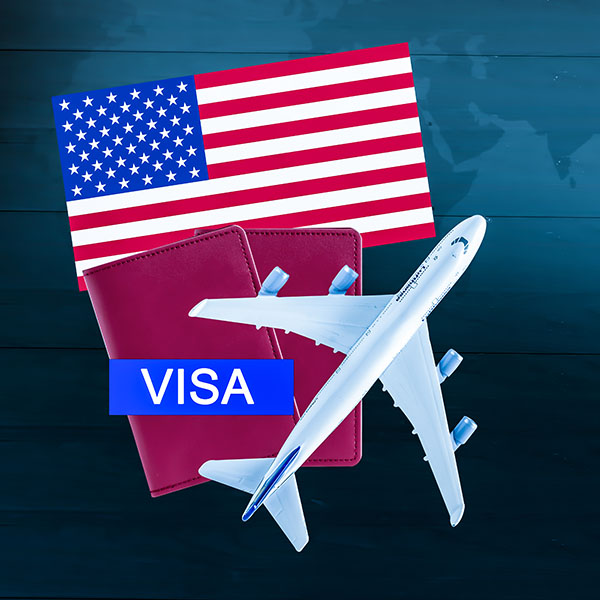
Many visa refusals occur not because applicants lack documents, but because they do not meet the standard of “non-immigrant intent”. A key factor that consular officers evaluate is the applicant’s level of ties to Vietnam, including family, financial/economic status, career, and social connections. This is also why many people seek U.S. visa services—to receive guidance on building a strong application and preparing focused answers for the visa interview.
B1/B2 is a U.S. non-immigrant visa that allows foreign nationals to enter the United States for a short period for specific purposes:
In practice, these two visa types are often issued together as B1/B2, allowing travelers to flexibly carry out both purposes during the same trip.

The F-1 visa is a non-immigrant visa for international students who wish to study full-time at educational institutions in the United States that are recognized by the U.S. government (SEVP-approved schools). It is the most common visa type for international students in the U.S.
Scope of application
The J-1 visa is a non-immigrant visa for individuals participating in cultural and educational exchange programs approved by the U.S. Department of State. Its main purpose is to promote cultural and knowledge exchange between the United States and other countries.
Scope of application

Burden of Proof Lies with the Applicant
Temporary visa categories such as B1/B2 (tourism, business, visiting relatives), F-1 (student), J-1 (cultural exchange), and L-1 (intra-company transfer) are often perceived as less complex. In reality, however, this group has one of the highest refusal rates at the U.S. Consulate in Vietnam, especially for first-time applicants.
In Vietnam, visa interviews typically focus on the applicant’s personal background, employment, and ability to return after the trip. If the application is not prepared with the right focus, it can easily be considered high risk. Choosing a reputable U.S. visa service helps applicants clearly identify their strengths and weaknesses and develop a presentation strategy that aligns with the Consulate’s adjudication criteria.

Unlike temporary visas (primarily adjudicated by the U.S. Department of State), immigrant visa applications must go through three agencies:
Includes two main groups:
U.S. immigration procedures are not only about the initial application but also about maintaining lawful status long-term. With U.S. immigration document services, each stage is prepared with the required documentation and obligations to ensure continued residency rights and future benefits.
After receiving the visa and entering the United States, green card holders must:
U.S. Citizenship (Naturalization)
After holding a green card for the required period, applicants may apply for U.S. citizenship if they meet the following conditions:
Becoming a U.S. citizen removes concerns about losing permanent resident status and provides the right to vote and faster family sponsorship benefits.

When is Form I-601 required?
Under U.S. immigration law, a person may be considered “inadmissible” due to:
Key Standard
To be approved for an I-601 waiver, the applicant must demonstrate that a qualifying relative who is a U.S. citizen or lawful permanent resident (depending on the case, this may include a spouse, parent, or child) would suffer “extreme hardship” if the applicant is not allowed to immigrate to the United States.
“Extreme hardship” is evaluated on a case-by-case basis and may include factors such as:

First Consulting Group assists with special humanitarian cases such as political asylum and other exceptional situations under U.S. immigration law.
These cases require strong legal evidence (police reports, medical records, court decisions, expert opinions), persuasive legal arguments, and a deep understanding of legal precedents. Due to their complexity and high risk, applicants should consult an experienced immigration attorney to ensure proper evaluation and develop an appropriate legal strategy.
Marriage-Based Adjustment
For individuals currently in the United States on another visa (F-1, B1/B2, L-1, etc.) who later marry a U.S. citizen or lawful permanent resident and wish to apply for a green card.
Other Common Visa Transitions
Each type of visa transition has its own timing considerations and legal risks that should be carefully evaluated.
Previously Denied Visa and Reapplication Possibilities
Applicants who have previously been denied a visa often face difficulties when reapplying if the root cause is not properly addressed. Common cases include 214(b) refusals, inconsistent declarations, or weak ties to the home country. Reapplying is effective only when there has been a material change in circumstances and a clear legal explanation, rather than simply submitting the same application again.
Visa applicants should be especially cautious of companies that:
Under U.S. law, only licensed attorneys or representatives recognized by the U.S. Department of Justice are authorized to represent clients in immigration matters. Hiring unqualified individuals may lead to incorrect filings, fraud, or even permanent inadmissibility to the United States.
Many people choose to prepare applications themselves to save costs, but this approach carries significant risks if they are unfamiliar with evaluation standards and legal argumentation. In contrast, consulting an immigration attorney can help identify weaknesses early, reduce errors, and minimize the risk of long-term legal consequences, especially in cases involving sensitive legal issues.
If you would like more information about U.S. visa services, an evaluation of your immigration legal status, or immigration pathways, please contact First Consulting Group for a free consultation. We are committed to providing accurate, up-to-date information in compliance with current immigration laws.
HOTLINE
The U.S. immigration process can be intricate, involving detailed legal requirements and procedures. To better address your unique situation, please provide your contact details to arrange a personalized consultation. A member of First Consulting Group’s dedicated team will contact you during business hours to offer expert guidance.

USA
12966 Euclid St., Suite 520, Garden Grove, CA 92840
(714) 638-3111
USA
989 Story Rd., Suite 8075, San Jose, CA 95122
(408) 998-5555
USA
1880 S Dairy Ashford Rd Ste 539, Houston, TX 77077
(832) 353-3535
VIETNAM
8th Floor, Tuoi Tre Tower, 60A Hoang Van Thu St., Duc Nhuan Ward, Sai Gon
(028) 3516-2118
VIETNAM
5th Floor, Bao Minh Building, 08 Phan Van Tri St., Ninh Kieu Ward, Can Tho City
(0292) 383-0001
VIETNAM
5th Floor, Viettel Building, 11 Ly Thuong Kiet St., Thuan Hoa Ward, Hue City
(0234) 381-0016
VIETNAM
6th Floor, ACB Building, 218 Bach Dang St., Hai Chau Ward, Da Nang City
0886 00 34 00