
First Consulting Group - Immigration Law Firm

U.S. Visitor Visa (B1/B2)

The U.S. B2 tourist visa is intended for individuals who wish to travel to the United States for tourism, visiting family members, or short-term leisure stays. In this article, First Consulting Group (FCG) – U.S. Immigration Law Firm provides a comprehensive guide to the eligibility requirements, documentation, and application process, along with practical interview tips to help applicants prepare with confidence and improve their chances of visa approval on the first attempt.

U.S. Tourist Visa – Detailed Information from First Consulting Group Attorneys

What Is a B2 Visa?

The B2 visa is a nonimmigrant visa issued to foreign nationals who wish to temporarily visit the United States for tourism or to visit relatives. It is the most common visa type for Vietnamese citizens who want to explore the United States.

In practice, when researching U.S. tourist visas, many people encounter the term B1/B2 and mistakenly assume it refers to a single visa type. In reality, B1 and B2 are two separate visa categories, although they are often issued together to provide flexibility for travelers during their trips.

  • Visa B2: For tourism, visiting friends or relatives, or short-term medical treatment.
  • Visa B1: For business purposes such as meetings, conferences, or business negotiations.
  • Visa B1/B2: The most common visa issued, combining both business and tourism purposes.

Visa du lịch B2 dành cho người nước ngoài muốn đến Mỹ tạm thời với mục đích du lịch, thăm thân nhân.

What Do B2 and B1 Visas Allow You to Do?

Individuals holding a B2 visa may engage in the following activities during their stay in the United States:

  • Travel and explore famous destinations throughout the United States.
  • Visit friends or relatives who are living or working in the U.S.
  • Receive short-term medical treatment (not including complex surgical procedures).
  • Participate in short non-credit courses (less than 18 hours per week).
  • Enter the U.S. multiple times (multiple entry) while the visa remains valid.
  • Participate in music, sports, or artistic competitions for amateurs (as long as no performance or competition payment is received).
  • Attend events organized by social, service, or charitable organizations.

However, a tourist visa does NOT allow the following:

  • Work or receive payment from any source in the United States.
  • Enroll in full-time academic programs at U.S. schools.
  • Engage in journalism or media reporting activities.
  • Remain in the United States long-term or attempt to immigrate.
  • Enter the U.S. as a crew member on ships or aircraft.
  • Perform in paid shows or any professional performance before a paying audience.

The B1 visa is a nonimmigrant visa for foreign nationals entering the United States for short-term business purposes. It does not permit employment or receiving payment in the U.S. Individuals with a B1 visa may engage in activities such as:

  • Consulting with business associates.
  • Negotiating or signing contracts.
  • Attending conferences, seminars, or professional, educational, scientific, or business conventions (provided they are not directly employed by a U.S. organization).

Why Do U.S. Consulates Often Issue a Combined B1/B2 Visa?

In practice, U.S. consulates often issue visas marked B1/B2 on the same visa stamp. This allows applicants to flexibly use the visa for both business purposes (B1) and tourism/personal travel (B2) on different trips without having to apply for a new visa each time.

However, during each entry, individuals holding a B1/B2 visa may only engage in activities consistent with the purpose they declare to U.S. Customs and Border Protection. Using the visa for a purpose different from the declared intent may lead to denial of entry or negatively affect future visa applications.

Visa Validity and Authorized Period of Stay

One of the most important things to understand when using a B2 visa is the difference between visa validity and the authorized period of stay in the United States.

There are two separate time frames to clearly distinguish:

  • Visa validity period: This is the time during which the visa remains valid for entry into the United States. A B2 visa may be issued for 1 to 10 years. For Vietnamese citizens, the most common is a 1-year visa with multiple entries.
  • Authorized period of stay: This is the amount of time you are allowed to remain in the United States for each entry. It is determined by U.S. Customs and Border Protection (CBP) at the port of entry and recorded in the electronic I-94 system. This period is typically up to 6 months per entry and is completely independent of the visa expiration date printed in the passport.

In other words, even if the visa is still valid, the length of time you may remain in the U.S. depends entirely on the I-94 record, not the visa expiration date.

Example Scenario

  • Visa issuance date: 01/03/2025
  • Visa validity: 01/03/2025 – 28/02/2026 (1-year visa, multiple entries)

Assume the traveler enters the United States on 15/04/2025. At the airport, U.S. Customs will stamp the entry and issue an I-94 record allowing a maximum stay of 30 days.

The latest departure date to avoid being considered an overstay would be 14/05/2025. Even though the visa remains valid until 28/02/2026, the traveler cannot stay beyond the date listed on the I-94, because that is the legal limit determining the authorized stay in the United States.

Tourist Visa Application Documents and Procedures

The B2 visa application process includes:

Completing the DS-160 Online Form

  • Provide personal information, employment details, and the purpose of the trip.
  • The DS-160 requires detailed information about travel history, education, and any criminal record (if applicable).
  • Save the confirmation number for use in the next step.
  • All information must be accurate and truthful. Once submitted, the applicant cannot modify the information.

Paying the MRV Fee

  • Create an account on the official U.S. Embassy appointment system: https://www.usvisascheduling.com/vi-VN/SignIn
    Print the payment slip and bring it to an authorized post office.
  • After completing the payment, you will receive a receipt from the post office. Please keep this receipt carefully, as it must be presented during the visa interview.
  • The fee is 185 USD (paid in VND according to the consular exchange rate). This fee is non-refundable regardless of whether the visa is approved or denied.

Scheduling the Interview through the CGI Federal System

  • Log back into your account after the payment has been activated (usually after one business day).
  • Information required to schedule the appointment includes: passport number, MRV fee receipt number, and the DS-160 barcode number.
  • Note: Print the Appointment Confirmation page immediately after completing the scheduling process.

Preparing Supporting Documents

Required documents: Passport (valid for at least six months), DS-160 confirmation page, fee receipt, and a 2×2 inch photograph.

Additional supporting documents may include:

  • Financial evidence: Bank statements, savings account books (financial proof should be reasonable; a large amount is not necessarily required), and property documents.
  • Ties to Vietnam (most important): Employment contract, leave approval letter, business registration certificate, property ownership documents, marriage certificate, children’s birth certificates, certificate of single status, or divorce certificate.

Attend the interview at the U.S. Embassy/Consulate

  • Bring all original documents or photocopies (notarized) for verification if requested.
  • Answer the questions briefly and honestly.

Note: The digital fingerprinting procedure will be conducted at the Embassy/Consulate on the day of the interview before you meet the consular officer. This is a mandatory process and is completed quickly, without the use of ink.

The processing time for a B2 visa usually takes 3–5 business days. However, some applications may be subject to additional administrative processing (Administrative Processing), which may result in longer processing times. You can track your case status through the CEAC (Consular Electronic Application Center) system using your case number.
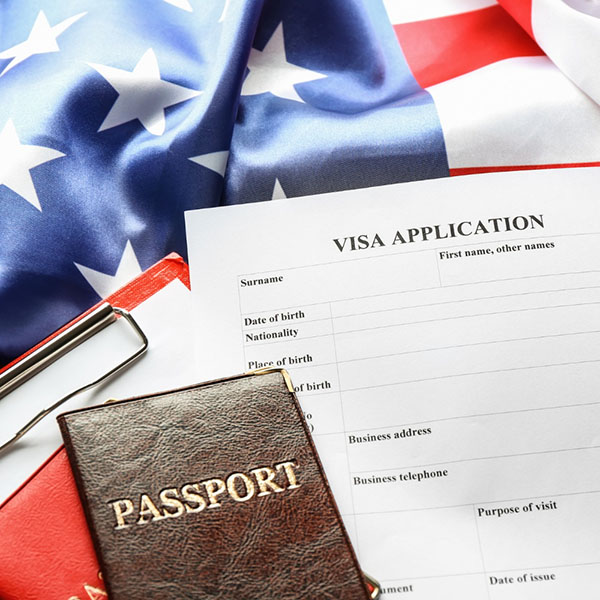
Hồ sơ và thủ tục làm visa du lịch Mỹ

Interview Tips and How to Increase Your B2 Visa Approval Rate from First Consulting Group

Preparing for the Interview at the U.S. Consulate

The interview is the deciding step in the B2 visa application process. Below are common questions and suggested answers for your reference:

What is the purpose of your trip?
Answer briefly and specifically: “I plan to visit New York and Washington, DC for two weeks to see famous landmarks.”

What do you do for a living? What is your monthly income?
Present truthful information without exaggeration: “I am a software engineer at ABC Company. I have worked there for 8 years and earn about 30 million VND per month.”

Who will sponsor your trip?

  • If self-funded: “I will cover all travel expenses using my personal savings.”
  • If someone sponsors you: “My son, who works in Boston, will cover my accommodation expenses. I will pay for my airfare and personal expenses.”

You should not memorize answers word-for-word. Applicants should understand their own circumstances and present them clearly and confidently. The sample questions above are meant to help you prepare mentally and organize your responses, not to be memorized during the interview.

Special Applicant Groups

  • Elderly applicants should prepare documents related to pension, health insurance, assets, and family ties in Vietnam.
  • Children should provide documents proving the relationship with the accompanying person and parental authorization if not traveling with both parents.
  • Recent graduates should demonstrate a clear career plan in Vietnam after the trip to show strong intent to return.
  • Applicants previously refused a visa should only reapply if there are significant changes in finances, employment, or travel purpose, and should avoid reapplying without strengthening their profile.

Important Notes for Traveling to the U.S. with a Tourist Visa

Check Your Authorized Stay via Form I-94

  • The length of time you are allowed to stay in the United States is determined by your I-94 record, not by the visa expiration date.
  • After entering the U.S., you should check your I-94 record at: https://i94.cbp.dhs.gov

Extending Your Stay if Necessary

You may file Form I-539 (Application to Extend or Change Nonimmigrant Status) at least 45 days before your I-94 expires.

You may request an extension if:

  • You were lawfully admitted to the United States with a nonimmigrant visa.
  • Your nonimmigrant status remains valid.
  • You have not committed any violations that would make you ineligible for a visa.
  • You have not violated the terms of your admission.
  • Your passport remains valid and will stay valid for the entire period of your requested stay.

Immigration Fraud

You should strictly avoid any actions that could be considered fraud, as this may lead to visa cancellation at the port of entry, denial of entry, or a ban from entering the United States for many years.

  • Concealing the true purpose of your trip, especially if you intend to work or stay long-term.
  • Frequently exiting and re-entering the U.S. within a short period to extend your stay (“border run”).
  • Using a tourist visa for unauthorized activities such as employment, full-time study, or journalism.
  • Filing a change of status too soon, which may be viewed as immigrant intent. For example, entering the U.S. on a tourist visa and immediately applying to change to an immigrant or work visa.
  • If you are preparing a U.S. tourist visa application, start by clearly understanding the procedural requirements, your travel purpose, and how to present convincing information.

First Consulting Group is ready to accompany you with dedication and solid expertise in immigration law. We assist you in building a clear, well-structured application that best fits your situation so your visa process can proceed smoothly and with greater peace of mind.

To receive FREE consultation, please call:

  • Garden Grove Office: (877) 348-7869
  • San Jose Office: (408) 998-5555
  • Houston Office: (832) 353-3535
  • Vietnam Office: (028) 3516-2118

All information in this article is for reference purposes only and does not constitute legal advice. The information reflects regulations at the time of writing. For detailed consultation, please contact First Consulting Group directly.

Câu hỏi thường gặp

FREE CONSULTATION WITH FIRST CONSULTING GROUP

The U.S. immigration process can be intricate, involving detailed legal requirements and procedures. To better address your unique situation, please provide your contact details to arrange a personalized consultation. A member of First Consulting Group’s dedicated team will contact you during business hours to offer expert guidance.

Your information is strictly confidential and will be used solely for consultation purposes.

Background Shape

GLOBAL OFFICE NETWORK

GARDEN GROVE

USA

SAN JOSE

USA

HOUSTON

USA

SAI GON

VIETNAM

CAN THO

VIETNAM

HUE

VIETNAM

DA NANG

VIETNAM